
Rural communities are home to an estimated 1 million Washingtonians, just over 16% of the population. However, as the landscape of rural America has evolved, so has rural healthcare, with many communities facing significant issues accessing high-quality care. Multiple data sources project significant gaps in healthcare access over the next decade, with fractures already appearing in many of Washington’s 39 counties.
One proven solution to addressing care gaps is the development of a robust education pipeline to recruit and retain health professionals in rural areas. While many rural communities face a disproportionate shortage of qualified providers, they can also be great places for health professionals to provide individualized care.
According to data from the National Organization of State Offices of Rural Health, graduates of rural graduate medical education programs are two to five times more likely to stay and practice in rural communities. Similarly, compared to urban nurse practitioners, rural NPs report being more satisfied with their jobs, practicing to the full extent of their license, and anticipating staying in their jobs much longer.
Thanks to partnerships with state agencies, regional health systems, and private donors, WSU is investing in innovative educational programs that help support the development of future healthcare professionals prepared to remain in or join the rural healthcare workforce. These programs span health professions and seek to strengthen the network of highly qualified providers committed to working as a part of an integrated health care team to deliver the very best care for their community.
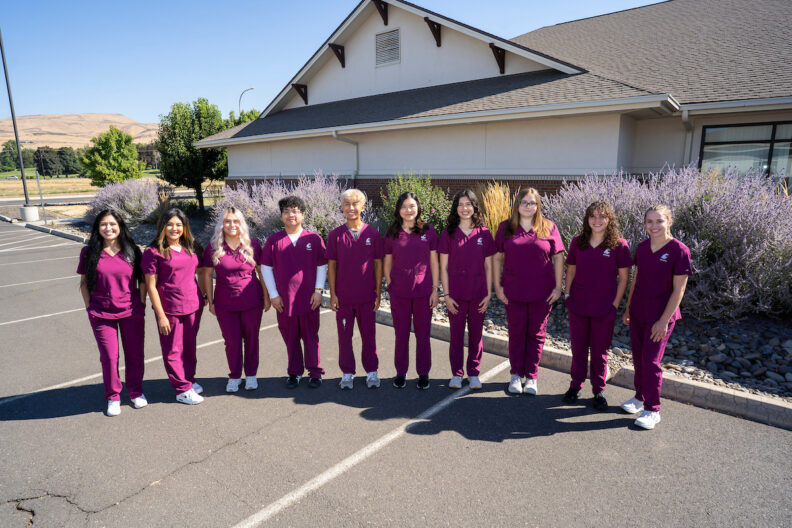
Compared to urban nurse practitioners, rural NPs report being more satisfied with their jobs, practicing to the full extent of their license, and anticipating staying in their jobs much longer.
Educating aspiring rural nurses
The demand for highly trained nurses in rural hospitals and clinics continues to grow as aging populations and workforce shortages converge. In January 2026, the College of Nursing will launch the Rural Nursing Pathway to help bring WSU’s highly regarded BSN education directly to rural communities, increasing access for those interested in building a rewarding career in the field.
Supported by a grant from the Washington State Department of Health, the program aims to educate students where they live, rather than requiring them to move outside of their community to pursue their nursing education. Students complete clinicals at a local hospital, take classes via Zoom, and receive support from adjunct WSU faculty—all while staying close to home.
“This is an opportunity to support rural communities by growing their own workforce, with students who already live and work in those communities,” said Ryan Hunt, DNP, Yakima Campus Coordinator and program director. “That’s where they want to be—and where they’re needed most.”
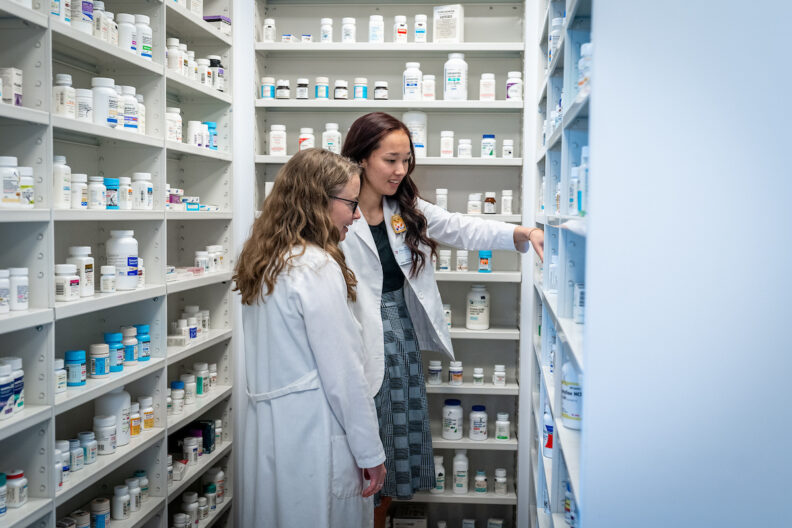
In Washington alone, over 450,000 people reside in pharmacy deserts, with nearly 800 new providers needed to eliminate those gaps in access to care.
Addressing Washington’s pharmacy deserts
Since launching in spring 2022, the College of Pharmacy and Pharmaceutical Sciences’ Rural Health Initiative has supported student pharmacists on their path to improving care in some of Washington’s most remote pharmacy deserts.
In the United States, roughly 15 million people live in medically underserved areas. In Washington alone, over 450,000 people reside in pharmacy deserts, with nearly 800 new providers needed to eliminate those gaps in access to care.
The ambitious initiative, supported in part by a $2.2 million gift from an anonymous donor, helps recruit students from rural areas, train students with a focus on rural health care, and embeds faculty and residencies in these communities.
Since the program was established, the Rural Health Initiative has graduated five students with a commitment to serve rural and underserved areas in Washington. In addition, 10 students are currently enrolled in the specialized track. The college has also established five residencies that support rural pharmacies that are often understaffed. These residencies help students gain hands-on experience working in independent and rural community pharmacies.

In 2023, the Bureau of Healthcare Workforce (BHW) projected a 56% shortage in rural America’s physician workforce, compared to just 6% in metro areas.
Expanding primary care through rural residencies
In 2023, the Bureau of Healthcare Workforce (BHW) projected a 56% shortage in rural America’s physician workforce, compared to just 6% in metro areas. One reason for this shortage is the number of physicians aging out of the workforce. In Washington, 36% of physicians in rural counties are 75 or older.
Since it admitted its first class in 2017, the Elson S. Floyd College of Medicine’s Doctor of Medicine (MD) program has prioritized applicants with life experience in rural and underserved communities and strong ties to Washington. Of MD graduates who have completed residency, over one-third go on to practice in rural settings.
To further support the growth of physicians practicing in rural areas, the Elson S. Floyd College of Medicine partnered with Pullman Regional Hospital to establish a Family Medicine Residency program that admits new physicians each year. Now in its third year, the program hosts nine resident physicians who are committed to serving communities across the Palouse.
Celebrate with us!
This year, WSU Spokane is celebrating National Rural Health Day on Thursday, Nov. 20, in recognition of the powerful role students and alumni play in our state’s rural communities. Join us in thanking all those who work to keep our communities healthy through education, research, and clinical practice.
