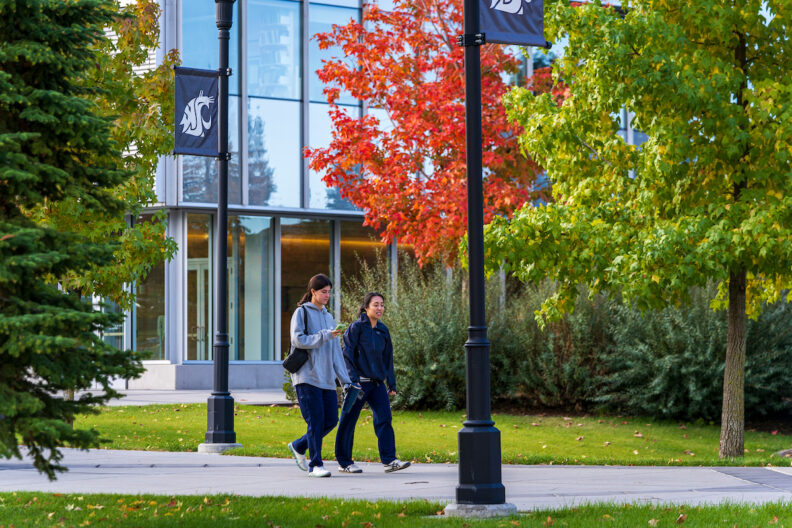
As WSU’s health sciences campus, Spokane has many unique features. It’s home to specialized simulation classrooms, an anatomy lab, and multiple professional healthcare programs. But there is one other feature that makes it unique – 100 percent of the undergraduate students at WSU Spokane are transfer students.
The third week in October is National Transfer Student Week, a national event promoted by the National Institute for the Study of Transfer Students (NISTS). Transfer students are typically defined as having earned some college credits at another post-secondary institution, such as a community college or university, and are seeking to transfer to another institution to continue their studies. Each year, NISTS highlights the common challenges and distinctive needs of transfer students, who arrive on college campuses each year.
On a national level, transfers represent 13.1 percent of all continuing and returning undergraduates, according to data from the National Student Clearinghouse Research Center. At WSU, these percentages vary from campus to campus across the system. However, because WSU Spokane is a non-residential campus with unique health-focused program offerings, all undergraduate students must transfer into their desired program.
Top Prior Institutions for Undergraduate Transfer Students
- Eastern Washington University
- Washington State University
- University of Washington
- Walla Walla Community College
- Yakima Valley Community College
- North Idaho College
- Skagit Valley College
- Spokane Community College
- Whitworth University
- Spokane Falls Community College
- Bellevue College
- Green River College
- Peirce College
- Wenatchee Valley College
Students enroll in one of five available undergraduate programs: BSN, RN-BSN, BS in Nutrition and Exercise Physiology (NEP), BA in Speech and Hearing Sciences (SNS), and BS in Pharmaceutical and Medical Sciences (PMS). However, before enrolling, they must complete their prerequisites at a community college or four-year institution and be admitted to WSU Spokane to transfer into the program. This includes students from elsewhere within the WSU system who transfer to the Spokane campus.
According to NISTS, “Modern transfer journeys follow individualized pathways that serve students’ specific circumstances. Students may start at community colleges before transferring to a university, begin at universities, then transfer elsewhere for a better program fit, or move between multiple institution types in pursuit of their educational goals.”
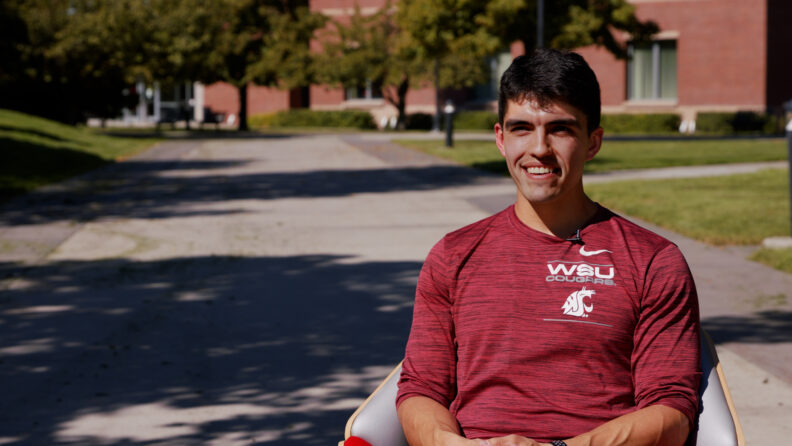
“Having the smaller group interaction means so much…I am with ten to eleven other people in all my classes, which it makes it so you really get to know and build a family network here at WSU Spokane.”
Dustin Butikofer
Transferred from WSU Pullman
Undergraduate Nutrition & Exercise Physiology Student
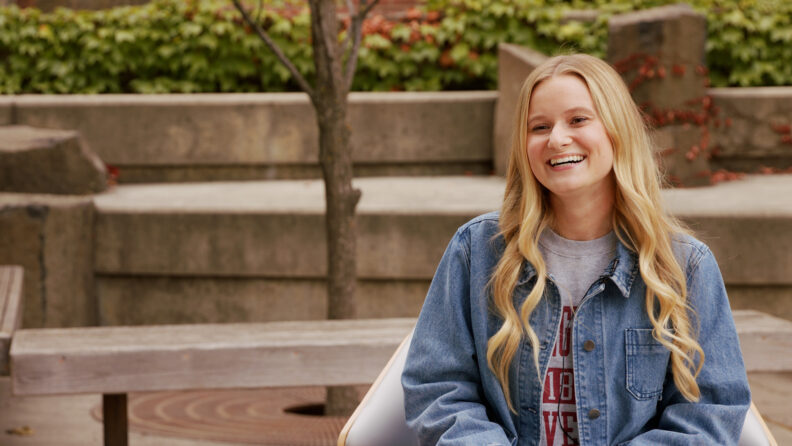
“When I started my Associate’s program, I knew that I wanted to become a Speech Language Pathologist and I knew WSU Spokane had a program. I came and toured it and fell in love with the campus and program. The small nature of the campus and the small cohort of my program made it really comfortable right away.”
Paige Wagner
Transferred from Centralia College
Graduate Speech & Hearing Sciences Student
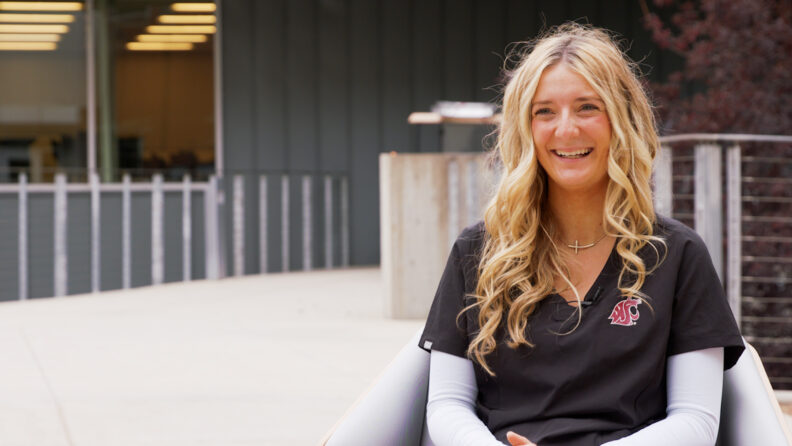
“I thought a lot about it. Knowing that in my junior and senior year I’d be in a completely different city, with a completely different group of people, I knew it was going to be a big adjustment–but honestly, so far it couldn’t be more of a blessing. I have met incredible people, I am constantly supported by the faculty, and I feel immediately at home.”
Emily Pittroff
Transferred from WSU Pullman
Nursing Student
