About the Center
Instruments
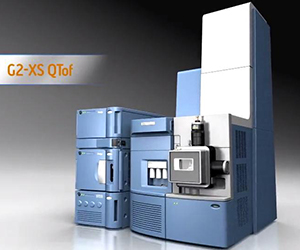
Xevo® G2-S QTof
(Available for full-service analysis by service center staff only)
The Xevo® G2-S QTof is designed for scientists who need to identify, quantify, and confirm the broadest range of compounds in the most complex and challenging samples. Incorporating StepWave™ ion optics for sensitivity, the Xevo G2-S QTof also uses proven quantitative time-of-flight (QuanTof™) technology to simultaneously deliver superior UPLC®-compatible mass resolution, matrix tolerant dynamic range, quantitative performance, mass accuracy, and speed of analysis.
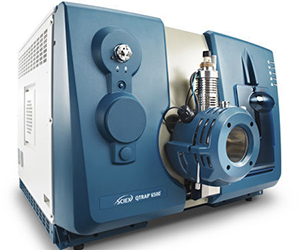
AB Sciex QTRAP 6500
(Available on a self-service or full-service basis)
The AB SCIEX QTRAP® 6500 system merges triple quadrupole and linear ion trap capabilities with new multi-component IonDrive™ technology to provide high sensitivity and wide linear dynamic range for quantitative analysis of analytes with m/z 5-2000. The AB SCIEX QTRAP® 6500 is equipped with electrospray (ESI) and atmospheric pressure chemical ionization (APCI). It enables the performance of multiple reaction monitoring (MRM), neutral loss scanning (NL), precursor ion scanning (PIS), NL/PIS triggered information-dependent acquisition (IDA), and MS/MS with polarity switching. The QTRAP 6500 is coupled with the Shimadzu Nexera UHPLC system, which provides maximized peak capacity and the lowest carryover for separation of complex biological samples prior to mass spectrometry analysis.
Services and Fees
The Mass Spectrometry Service Center may be used on a self-service basis but also provides full-service analysis for small molecules on a fee-for-service basis. This includes accurate mass analysis of small molecules, quantitative measurements of small molecules on the triple quad mass spectrometer using LC-MS/MS and multiple reaction monitoring (MRM). Other types of analyses include untargeted and targeted metabolomics measurements.
To submit samples, please fill out the sample submission form (PDF) and forward to ze.liu@wsu.edu. We are happy to hear from you and consult on any questions related to mass spectrometry.
Rates
To calculate full-service cost, technical support time is added to machine run time for the applicable instrument. Please note that the Xevo® G2-S QTof is available on a full-service basis only.
As a reminder, it is best practice to plan for a 3 to 5 percent yearly rate increase when proposing studies and submitting grants.
| Service | Equipment | WSU | Non-WSU |
|---|---|---|
| Xevo® G2-S QTof | $45/hr | $50/hr |
| AB Sciex 6500 | $45/hr | $50/hr |
| Computer Use Only | $5/hr | $7.50/hr |
| Technical Support | $45/hr | $50/hr |
| Training | $45/hr | $50/hr |
A misuse fee will charge to cover costs for any cleaning or repairs required
Training
The Mass Spectrometry Service Center offers hands-on training in ABSciex 6500 mass spec and Shimadzu Nexera UHPLC system for interested clients.
To schedule a training, please fill out the training request form (PDF) and submit it to Mass Spec Service Center supervisor ze.liu@wsu.edu.
Sample Preparation
Sample preparation is crucial for obtaining good data with mass spectrometry. Contaminants—including common buffer salts and detergents present in samples—may suppress the ionization of analytes.
If possible, avoid nonvolatile salts (e.g., phosphates, borates, sulfates, or citrates), detergents (especially non-ionic detergents), TFA (>0.10%) and other additives in the samples.
Centrifuge the samples before analysis; undissolved particles/precipitates in a sample can clog and reduce the life of the chromatography column.
The Mass Spectrometry Service Center Staff are happy to answer any questions regarding sample preparation.
